If you are hitting the outdoors, here are some ways to stay safe and make your camping trip hearing loss-friendly.
There is something special about spending a few days outdoors. The smell of pine, the crackle of a campfire, and the chance to slow down can recharge you in ways everyday life rarely does. Whether you are a longtime camper or trying it out for the first time, a little planning can make the experience even more enjoyable when you have hearing loss.
With the right preparation, you can fully soak in the sights, sounds, and stillness of nature while staying safe and connected. Here are some practical ideas to help you plan a camping trip that works well for your hearing needs.
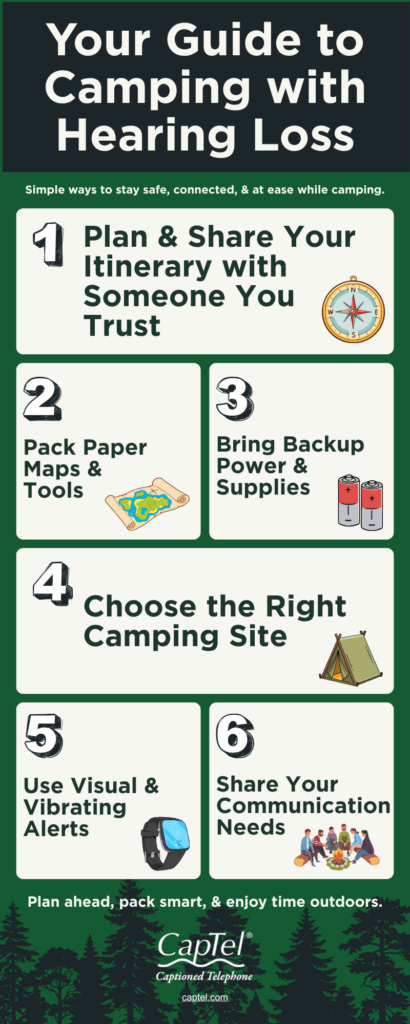
Plan Ahead and Share Your Itinerary
Before you head out, take time to map out your route, campsite location, and expected return date. Then, share that information with a trusted family member, friend, or neighbor. This simple step adds an extra layer of safety, especially if you will be in areas with limited cell service.
Pack Paper Maps and Backup Navigation Tools
Cell signals can be spotty in the woods, and relying only on GPS may leave you stuck. Bring a paper map of the campground, hiking trails, and surrounding area. A compass and a printed list of nearby ranger stations or emergency contact numbers are also smart additions.
If you are traveling by car to your camping destination, you may also enjoy these travel planning tips for people with hearing loss, which include great ideas for preparing the journey itself.
Bring Spare Hearing Aid Batteries and Supplies
Few things are more frustrating than a dead hearing aid battery miles from the nearest store. Pack more batteries or charging cables than you think you will need, along with a small drying kit to protect your devices from humidity, sweat, or unexpected rain.
Store hearing aids in a sturdy, waterproof case when you are not wearing them, and keep that case somewhere easy to find inside your tent or backpack. If you have questions about caring for your devices in different conditions, consider bringing along a list of questions to ask your audiologist at your next visit.
Set Up Visual and Vibrating Alerts
Camping means you may not always hear alarms, alerts, or even someone calling your name from the next tent over. Bring tools that use light or vibration to grab your attention. A vibrating alarm clock, a smartwatch with haptic notifications, or a portable weather radio with visual alerts can all be helpful.
Many smartphones also have built-in accessibility features that flash the screen for notifications. Exploring the best apps for hearing loss before your trip can help you find ones that work well outdoors, from sound recognition to weather alerts.
Choose a Campsite That Works for You
When booking, look for campsites that are well-lit, close to ranger stations, and not too far from restrooms or water sources. Some campgrounds also offer accessible sites with features that may benefit you. It never hurts to call ahead and ask about accommodations.
If you are camping in a cabin or rental rather than a tent, take a look at this guide on ensuring accessibility in a vacation home rental for ideas on how to make any space more hearing loss-friendly.
Communicate Clearly With Your Camping Group
Before the trip, talk with your camping companions about how you communicate best. Maybe you prefer face-to-face conversations near the campfire, or you would like everyone to tap your shoulder before speaking. Small adjustments help everyone feel included.
Walkie-talkies with text features, group messaging apps, and prearranged hand signals are great backups when voices get lost in the wind or around a roaring fire. For more ideas on building strong communication habits, the communication tools for hearing loss accessibility post is a great resource.
Stay Weather-Aware
Sudden storms, high winds, or wildfire smoke can change your plans quickly. Keep a battery-powered weather radio with you, ideally one designed with visual or vibrating alerts. Check the forecast each morning before heading out on your adventures.
If you will have any cell service, set up emergency weather notifications on your phone so you receive alerts even when your device is silent. Being weather-aware lets you enjoy your trip with confidence.
Pack Smart, Stay Connected
With a bit of preparation, camping with hearing loss can be just as enjoyable and just as memorable as any other outdoor adventure. Sharing your itinerary, packing backup supplies, using visual alerts, choosing the right campsite, and communicating clearly with your group all help create a safe and joyful experience. With a little preparation, you can focus on what camping is really about: fresh air, good company, and the beauty of the outdoors.
Get ready for your next trip:
- Explore CapTel phone models for when you are back home
- Individuals with hearing loss may be eligible to receive a CapTel phone at no cost with a Third-Party Certification of Eligibility
- Have questions before your trip? Call CapTel at 1-800-233-9130
Keep exploring: More hearing loss-friendly travel and lifestyle tips | Visit the CapTel blog | Share this article with a friend

CapTel® is the inventor and technology leader in Captioned Telephones for people with hearing loss. CapTel phones show word-for-word captions of everything a caller says, helping those with hearing loss stay connected with the important people in their lives.