
A few of the most rewarding leaf-peeping routes in the country, and how to plan one that stays comfortable.
AT A GLANCE
- Time Your Trip to the Turning Leaves
- New England Classics
- The Blue Ridge and Great Smoky Mountains
- Great Lakes and Upper Midwest Routes
- Aspen Country in the Rockies
- Plan the Trip Around Comfort, Not Mileage
- Keep Communication Easy on the Road
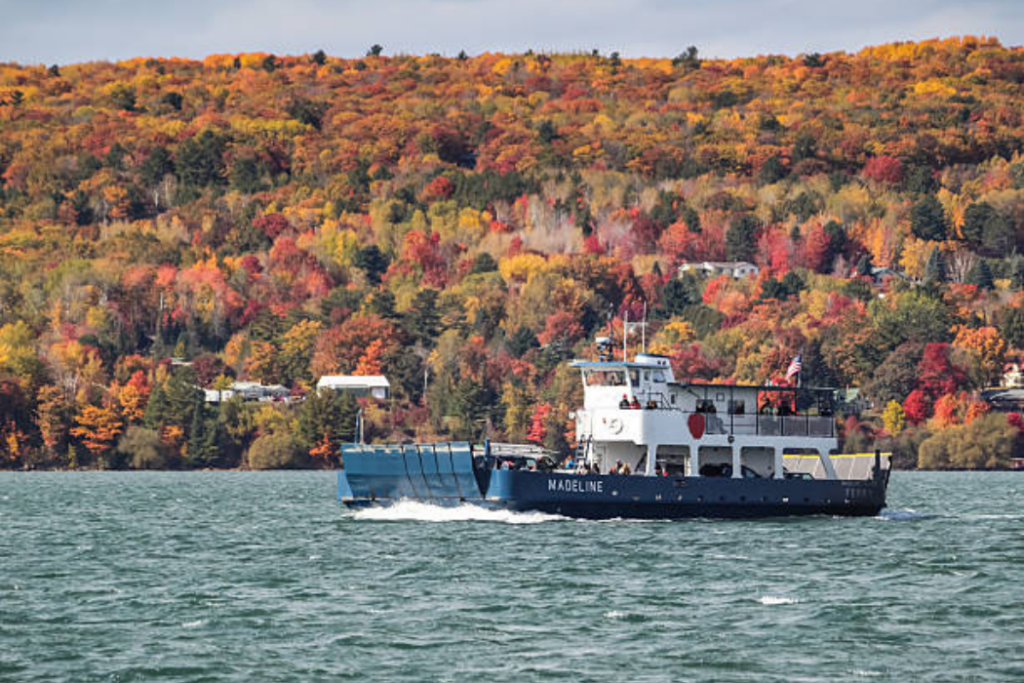
There is a short window every autumn when an ordinary drive turns into something worth photographing. The maples go first, then the birches and oaks, and for a few weeks a familiar road looks entirely different.
Fall foliage trips are among the easiest getaways to plan. The distances can be short, the crowds thin out midweek, and the whole point is to go slowly. Here are a few routes worth considering, along with some practical ways to keep the trip comfortable from start to finish.
Time Your Trip to the Turning Leaves
Color moves from north to south and from high elevation to low, which gives you a wider window than most people realize. In northern New England and the upper Midwest, peak color usually arrives in late September into the first week of October. The mid-Atlantic and southern Appalachians tend to peak mid to late October. Lower elevations in the South can hold color into early November.
Most state tourism offices publish a foliage tracker that updates weekly through the season, and they are surprisingly accurate within a few days. If your dates are flexible, booking a week out rather than months ahead lets you follow the color instead of hoping it cooperates.
Midweek travel is worth considering if you can manage it. The same overlook that has a forty-minute line on a Saturday in October is often nearly empty on a Wednesday morning.
New England Classics
Vermont’s Route 100 runs almost the length of the state and is the route most people picture when they think of fall in New England. It passes through small towns, working farms, and a lot of covered bridges, with plenty of places to pull over.
New Hampshire’s Kancamagus Highway covers about thirty-five miles through the White Mountains and climbs high enough that the color turns early. There is no commercial development along the route, which is part of its appeal, though it also means planning your stops before you go.
Maine’s Acadia National Park pairs fall color with the coastline, which is a combination the interior routes cannot match. The Park Loop Road works well for people who want the views without a long hike.
The Blue Ridge and Great Smoky Mountains
The Blue Ridge Parkway runs 469 miles through Virginia and North Carolina with a maximum speed of 45 miles per hour, which tells you everything about how the road is meant to be driven. Overlooks appear every few miles, and the elevation changes mean you may pass through three stages of color in a single afternoon.
Great Smoky Mountains National Park holds a longer color season than almost anywhere else in the country because of its elevation range. Cades Cove is the most popular loop for good reason, though it fills quickly. Newfound Gap Road offers similar views with more room to breathe.
Great Lakes and Upper Midwest Routes
Michigan’s Upper Peninsula turns early and dramatically, and the Tunnel of Trees along M-119 north of Harbor Springs is one of the most photographed stretches in the Midwest. The road is narrow and slow, which is the point.
Wisconsin’s Door County combines fall color with orchards, small harbors, and a lot of cherry pie. Minnesota’s North Shore Scenic Drive along Lake Superior gives you color, waterfalls, and open water in the same view.
Aspen Country in the Rockies
Western foliage looks different, with gold rather than red doing most of the work. Colorado’s San Juan Skyway loops about 230 miles through aspen groves that turn a striking yellow in late September. The Maroon Bells outside Aspen may be the most photographed mountains in North America in autumn.
Utah’s Alpine Loop and Wyoming’s Grand Teton National Park offer similar aspen color with fewer people. Elevation is worth planning for out west, since some of these routes climb above 10,000 feet and the air can feel noticeably thinner if you have come from sea level.
Plan the Trip Around Comfort, Not Mileage
The most common mistake on a foliage trip is scheduling too much driving. Scenic routes take longer than the map suggests, partly because of the speed limits and partly because you will want to stop.
Consider planning no more than four or five hours of driving a day, and building in unhurried stops rather than a tight itinerary. Booking lodging in one town for two or three nights and taking day trips out from there usually beats moving hotels every night. Fall weather also swings widely between morning and afternoon, so layers tend to serve better than a single heavy coat.
If you travel with mobility considerations, many of these routes have accessible overlooks and short paved paths. Park websites list them specifically, but sometimes calling ahead is faster than searching.
Keep Communication Easy on the Road
Travel adds a layer of communication that home does not: reservation changes, front desk conversations, calls to confirm a tour, and checking in with people back home.
A few things make this easier for travelers with hearing loss. Booking on their website or by email gives you a written record of what was agreed. Requesting a room away from elevators and ice machines cuts down on background noise. If you are comfortable, letting a hotel know in advance that you have hearing loss may prompt them to offer a room with a visual alert system, since many properties keep a few available. Our guide to different alert methods for people with hearing loss covers what to ask for.
For calls home, a captioned telephone at the house of the person you are calling means they can follow the conversation easily even with their hearing loss, which makes those calls something to look forward to for both of you.
The best foliage trip is usually the one with the fewest items on the itinerary. Pick a region, watch the tracker, and leave room in the day for potential stops you did not plan on.
Take the next step:
- Explore CapTel phone models to make plans and reservations easier to follow
- You or someone you know may be eligible to receive a CapTel phone at no cost
- Have questions? Call CapTel at 1-800-233-9130
Keep exploring: More on resources for people with hearing loss | Visit the CapTel blog | Share this article with a friend

CapTel® is the inventor and technology leader in Captioned Telephones for people with hearing loss. CapTel phones show word-for-word captions of everything a caller says, helping those with hearing loss stay connected with the important people in their lives.