Small choices about seating, lighting, and pacing that help make group conversation easier to follow.
AT A GLANCE
- Choose Your Seat with the Light in Mind
- Let Faces Do Some of the Work
- Catch the Topic Before the Words
- Plan Around Listening Fatigue at Fall Gatherings
- Enlist a Conversation Buddy
- Tools That Can Help in a Busy Room
- Making Conversation Easier: Ideas for Hosts
- Stay Connected After the Gathering

Fall brings a full calendar of cozy moments: harvest suppers, tailgate parties, apple-picking outings, and long afternoons around a friend’s kitchen table. These gatherings are some of the best parts of the season.
If you have hearing loss, you already know that group chatter can move quickly. Voices overlap, topics jump, and background noise from the kitchen or the game on TV adds to the challenge.
You may already employ listening strategies to help stay in the loop. Here are a few simple adjustments that can make following conversation at fall gatherings feel more comfortable, and help you participate more easily.
Choose Your Seat with the Light in Mind
Autumn light is beautiful, but it can work against you. When a friend sits in front of a bright window or a glowing fire pit, their face falls into shadow, and the cues you may rely on can disappear. If possible, sit with the light behind you so it shines on the faces of the people you are talking with.
Outdoors, the same idea applies. As the sun sets earlier, a porch light or string lights near the table can make a real difference. A corner seat or a spot against a wall also helps, since it cuts down on noise from behind you and lets you see most of the group at once.
Let Faces Do Some of the Work
Much of what people say is carried by their faces. Lip movements, raised eyebrows, a nod, or a smile all offer clues about meaning.
You do not need formal lipreading training to benefit. Watching the speaker’s mouth and expressions helps fill in the gaps. It is completely fine to ask someone, “Would you mind facing me when you talk?” People are happy to help once they know what communication style works best for you.
Catch the Topic Before the Words
Once you know what people are talking about, individual words become much easier to piece together. If you join a conversation already in progress, it is okay to lean in and ask, “What are we chatting about?” That one question gives you a framework, and the rest of the conversation more easily clicks into place.
Context helps in other ways too. When the chatter feels hard to follow, gently steering toward familiar topics, like the season’s football games or upcoming holiday travel plans, can make conversations easier to keep up with.
Plan Around Listening Fatigue at Fall Gatherings
Following group conversation can take real effort, and that effort adds up. Many people with hearing loss feel tired after a lively party, even when they had a good time. This is often called listening fatigue: the mental energy spent concentrating to hear and understand.
Pacing yourself can help. Stepping away for a few minutes to refill your cider, taking a short walk around the garden, or helping in a quieter kitchen gives you a chance to rest and recharge. Arriving a bit early, before the room fills up, also gives you time to settle in while things are still calm.
Enlist a Conversation Buddy
A trusted friend or family member can be a supportive teammate. Before the gathering, you might let them know you may occasionally glance their way if you miss something. A quick whisper of “They’re talking about Aunt Carol’s trip” can keep you in the flow without calling attention to things or stopping the whole group.
Family members can help in other simple ways, too, such as rephrasing rather than repeating a sentence or suggesting a quieter room for dessert. Our guide to supporting family and friends with hearing loss shares more ideas you can pass along.
Tools That Can Help in a Busy Room
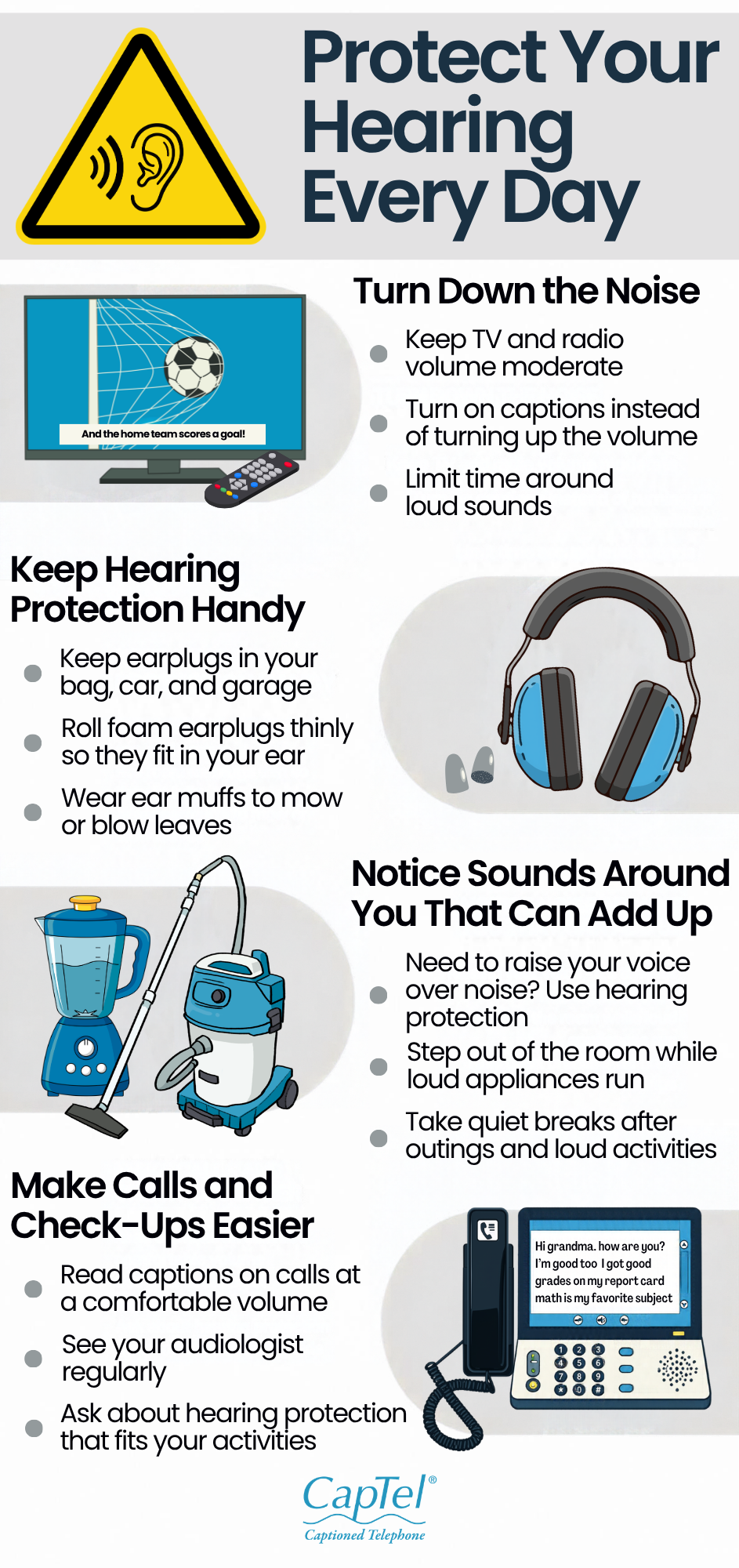
If the group gathers to watch a game or parade, turning on the TV’s closed captions can help you follow along. Assistive listening devices and personal amplifiers can also bring a speaker’s voice closer in a noisy room. Our guide to assistive devices for the hard of hearing covers the main options.
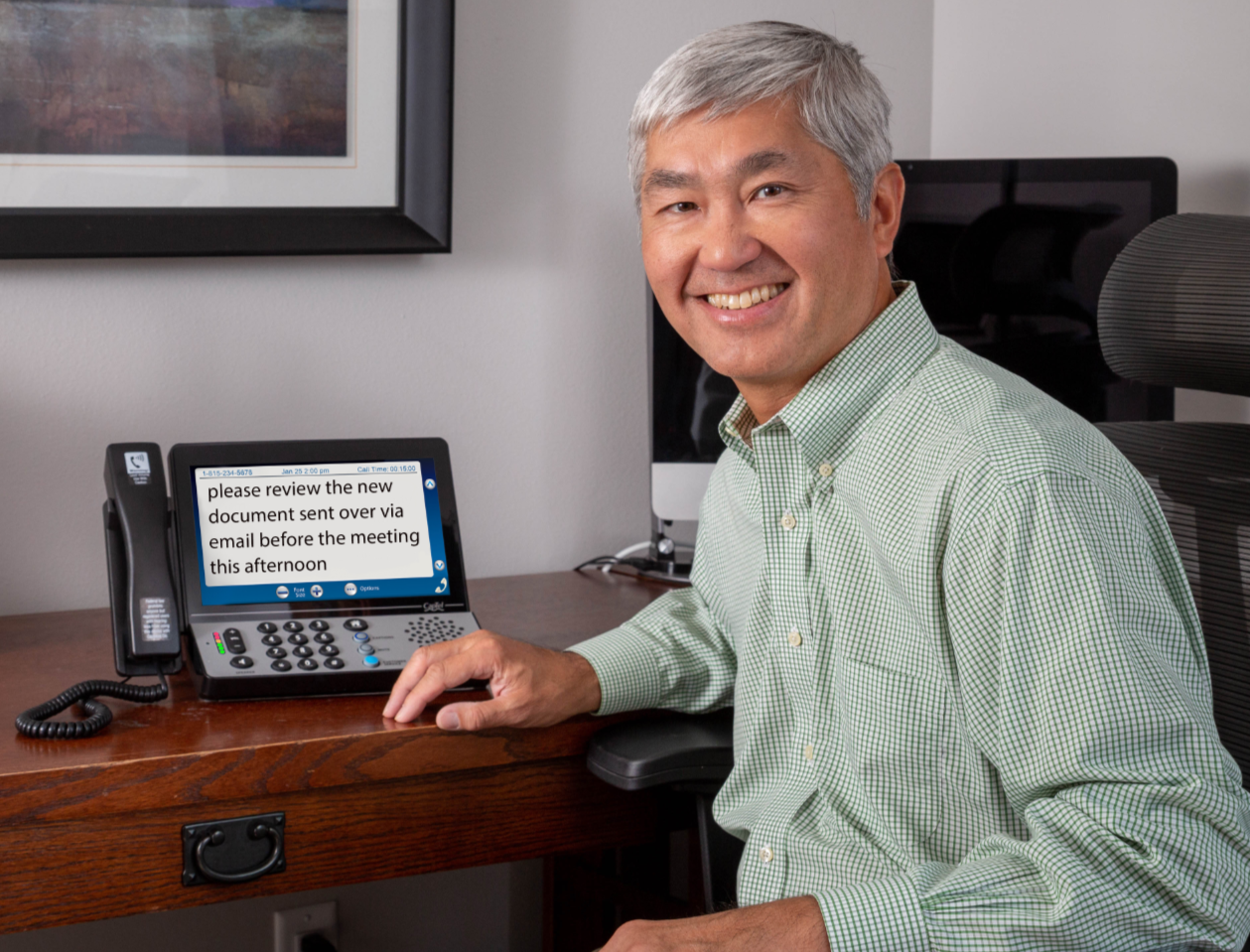
Planning ahead helps too. A phone call with the host before the event lets you confirm the time, the address, and who else is coming. With a CapTel captioned telephone, you can read captions of those details as you talk, so you walk through the door with fewer surprises.
Making Conversation Easier: Ideas for Hosts
If you are hosting, a few setup choices can help everyone that is gathering. A round or oval table often works better than a long one, because everyone can see each other’s faces. Keeping background music low, or off during the meal, and running the dishwasher after guests leave can make conversation easier for everyone.
Rooms with rugs, curtains, and upholstered furniture absorb sound and tend to feel quieter than open kitchens with hard surfaces. A simple “Where would you like to sit?” gives guests the chance to choose a spot that works for them.
Stay Connected After the Gathering
The conversation does not have to end when everyone heads home. A follow-up call the next day is a nice way to catch up on stories you may have only partly heard, thank the host, and make plans for the next get-together.
Small, steady connections like these keep friendships strong all season long. They also give you a chance to share what worked well for you, so the next gathering, and the holiday gatherings ahead, can be even easier to enjoy.
A well-lit seat, a trusted conversation buddy, and a few quiet breaks can go a long way this season. With a little planning, you can relax, stay part of the laughter, and enjoy every fall gathering on your calendar.
Take the next step:
- Learn how a CapTel captioned telephone can help you confirm plans with hosts and catch up with friends after a gathering
- Find out Keep exploring: More on telephone devices for hard of hearing | Visit the CapTel blog | Share this article with a friend

CapTel® is the inventor and technology leader in Captioned Telephones for people with hearing loss. CapTel phones show word-for-word captions of everything a caller says, helping those with hearing loss stay connected with the important people in their lives.