Hearing loss is one of the most common health experiences in the country. Here are the myths worth retiring and the facts worth sharing.
AT A GLANCE
- Myth: Heading Loss Only Happens to Very Old People
- Myth: If You Can Hear Some Sounds, Your Hearing is Fine
- Fact: Getting Your Hearing Checked is Simple and Worthwhile
- Myth: Hearing Aids Fix Everything Instantly
- Fact: Captions Can Make Phone Calls Easy Again
- Myth: Asking for Accommodations is a Burden
- Fact: You Can Stay Just as Connected and Active as Ever
- Moving Forward with Confidence
If you or someone you love has recently noticed changes in hearing, you have probably heard a lot of opinions along the way. Some come from well-meaning friends, some from things we have all absorbed over the years, and some are simply outdated. The trouble is that a few of these ideas can hold you back from staying connected and enjoying everyday life.
The good news is that separating fact from fiction is easier than you might think. Let us walk through some of the most common myths and facts about hearing loss together, so you can feel confident, informed, and ready to move forward.
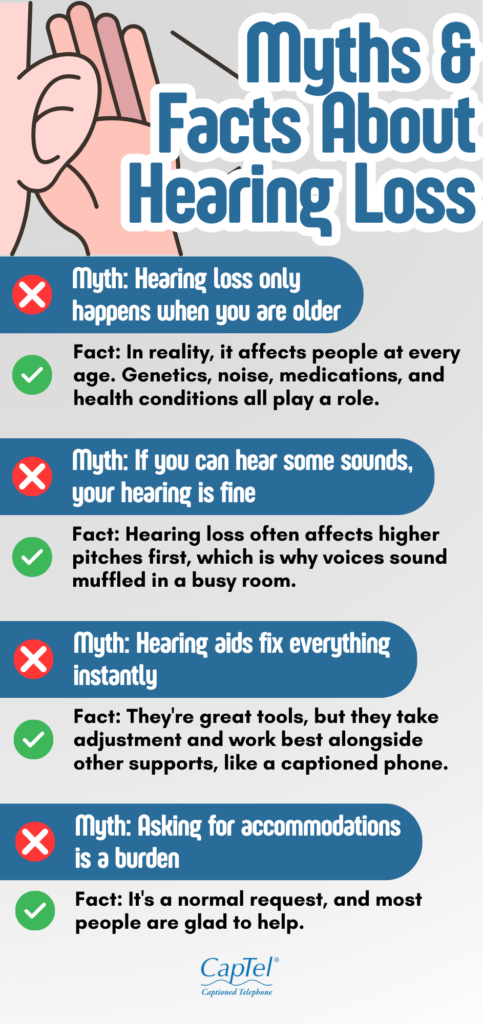
Myth: Hearing Loss Only Happens to Very Old People
It is easy to picture hearing loss as something that only arrives in your later years, but that is not the full story. People of all ages experience changes in hearing, including younger adults and even children. Genetics, noise exposure, certain medications, and health conditions can all play a role, something the National Institutes of Health has studied extensively over the years.
What this means for you is simple: hearing loss is a common human experience, not a sign that you are suddenly “old.” Millions of people manage it at every stage of life, and you can too. Recognizing that early gives you more options and more time to enjoy the tools available to you.
Myth: If You Can Hear Some Sounds, Your Hearing Is Fine
Many people assume that as long as they can hear a doorbell or a loud voice, everything is working as it should. In reality, hearing loss often affects certain pitches or frequencies first. You might catch lower tones easily while struggling to follow higher-pitched voices or consonants that make words clear.
This is why conversations can feel muffled or why you may find yourself asking people to repeat themselves in a busy room. If that sounds familiar, our guide to types of hearing loss and how they affect phone communication walks through what this can feel like day to day.
Fact: Getting Your Hearing Checked Is Simple and Worthwhile
Here is a fact worth sharing widely: a hearing check is painless, quick, and genuinely helpful. Many people wait years before scheduling one, often because they assume nothing can be done or that the process is complicated. Neither is true.
A visit with a hearing professional can give you a clear picture of what you are experiencing and what solutions fit your life. If you are preparing for that first appointment, it helps to know the right questions to ask your audiologist so you can make the most of your time together. Think of it as gathering information, not committing to anything.
Myth: Hearing Aids Fix Everything Instantly
Hearing aids are wonderful tools, and they help millions of people every day. Still, it is a myth that they restore hearing to exactly how it was before, or that they work perfectly in every situation the moment you put them on. Like any new tool, they take a little time to adjust to, and they work best alongside other supports.
For example, phone conversations can still be tricky even with hearing aids, which is why many people pair them with additional tools like a captioned telephone. The goal is not a single magic fix but a combination of solutions that work together for you.
Fact: Captions Make Phone Calls Easy Again
If phone calls have become stressful, you are far from alone, and this is one area where a simple solution shines. A captioned telephone shows you written words of what the other person is saying as they speak, so you can read along while you listen. It brings ease back to catching up with family, calling the doctor, or handling daily errands.
Myth: Asking for Accommodations Is a Burden
Some people hesitate to mention their hearing needs because they worry about being an inconvenience. Here is the truth: asking for what helps you is completely normal, and most people are happy to accommodate you. Facing a friend when you speak, reducing background noise, or choosing a quieter table are easy requests that benefit everyone in the conversation.
The more comfortable you become advocating for yourself, the more connected you will feel.
Fact: You Can Stay Just as Connected and Active as Ever
Perhaps the biggest myth of all is that hearing loss means stepping back from the things you love. Nothing could be further from the truth! With the right tools and a little know-how, you can keep enjoying game nights, phone chats, travel, community events, and time with the people who matter most.
Hearing loss is simply one part of your story, not the whole book. Millions of people live full, vibrant, connected lives every single day, and the resources to help you do the same are more accessible than ever.
Moving Forward with Confidence
Once you set aside the myths, the facts become reassuring rather than intimidating. Hearing loss is common, manageable, and nothing to be embarrassed about. Whether you are exploring your options for the first time or supporting someone you care about on their journey, remember that small steps add up to big improvements in everyday life.
Be kind to yourself, stay curious, and lean on the tools and people around you. You have more support available than you might realize.
Take the next step:
- Explore CapTel phone models to find one that fits your life
- You or someone you know may be eligible to receive a CapTel phone at no cost
- Have questions? Call CapTel at 1-800-233-9130
Keep exploring: More on hearing health FAQs | Visit the CapTel blog | Share this article with a friendth a friend

CapTel® is the inventor and technology leader in Captioned Telephones for people with hearing loss. CapTel phones show word-for-word captions of everything a caller says, helping those with hearing loss stay connected with the important people in their lives.