Keeping your headphone volume at a safe level can help protect your hearing and give you a more comfortable listening experience.
Headphones have become a part of everyday life. Whether you’re listening to music, catching up on a podcast, watching a show on your tablet, or taking a phone call, headphones make it easy to enjoy audio privately and conveniently. But as helpful as they are, using headphones at unsafe volume levels or for extended periods of time can put your hearing at risk.
The good news is that protecting your hearing while using headphones is simple once you know what to look for. Here are a few tips on keeping your listening experience safe and comfortable.
Understanding Safe Listening Levels
Sound is measured in units called decibels (dB). Normal conversation typically falls around 60dB, while most headphones are capable of producing sound well above 100dB at maximum volume. Health experts generally recommend keeping headphone volume at or below 70dB for extended listening, which is roughly 60 percent of a device’s maximum volume. Sounds above 85dB can begin to cause damage over time, and the louder the volume, the less time it takes for that damage to occur.
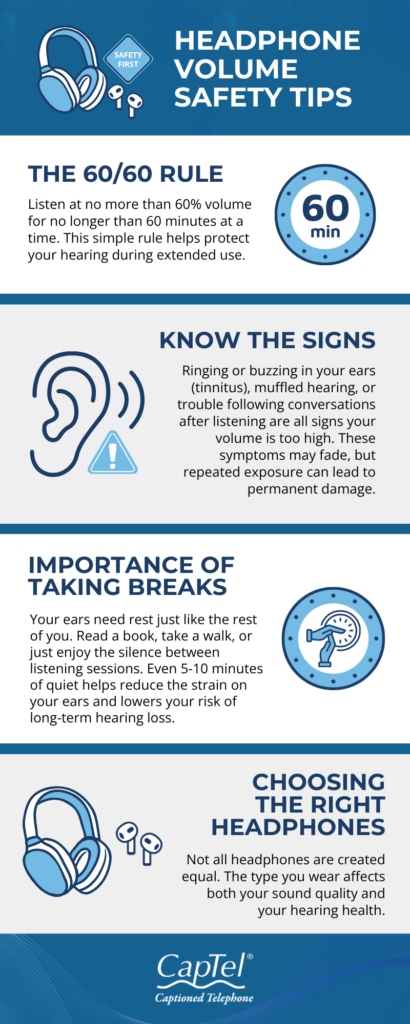
A helpful guideline to keep in mind is the 60/60 rule: try to listen at no more than 60 percent of your device’s maximum volume for no longer than 60 minutes at a time. After an hour of listening, give your ears a break before starting again. This simple habit can go a long way toward protecting your hearing health over time.
Signs Your Volume May Be Too High
It can be easy to gradually turn the volume up without noticing, especially in noisy environments. There are a few signs that your headphones may be louder than they should be. If someone standing next to you can hear your audio, the volume is likely too high. If you find yourself raising your voice to talk to someone while wearing your headphones, that’s another sign to turn things down. Ringing, buzzing, or a muffled feeling in your ears after removing your headphones can also indicate that the volume was too loud or that you’ve been listening for too long.
If you notice any of these signs regularly, it may be worth having your hearing checked by an audiologist. Early awareness is one of the best ways to stay on top of your hearing health.
Use Your Phone’s Built-In Safety Features
Many smartphones now include features designed to help you monitor and manage your headphone volume. These tools can be a great way to stay aware of your listening habits without having to think about it constantly.
On iPhones, the Hearing section in Settings allows you to enable Headphone Notifications, which will alert you if your listening levels have reached a point that could affect your hearing over time. You can also set a maximum headphone volume limit so the device will not go above a level you choose. Android devices offer similar options depending on the manufacturer. Samsung phones, for example, include a Media Volume Limiter that caps the maximum output, and many Android devices will display an on-screen warning when you try to raise the volume above a recommended level.
Checking your phone’s sound or hearing settings and turning on these features takes just a moment and can provide helpful guardrails for everyday listening. Many phones offer a weekly report or data around your listening habits which can be good to check, too.
Take Listening Breaks
Even at a safe volume, giving your ears regular breaks from headphone use is important. Extended listening can fatigue the delicate structures in your inner ear, and taking periodic pauses allows them to recover. If you’re enjoying a long audiobook or binge-watching a series, try removing your headphones for a few minutes between episodes or chapters to give your ears a rest.
Choose the Right Headphones
The type of headphones you use can also play a role in protecting your hearing. Over-ear headphones that cover the entire ear tend to block out more background noise than earbuds, which means you may not need to turn the volume up as high to hear clearly. Noise-canceling headphones take this a step further by actively reducing ambient sound, allowing you to listen at lower, safer levels even in noisier environments.
Your hearing is worth protecting, and a few small adjustments to how you use your headphones can make a meaningful difference. By keeping the volume at a comfortable level, taking regular breaks, and using the safety features built into your phone, you can continue enjoying all the audio you love while taking care of your ears. For more tips on hearing health and staying connected, visit the CapTel blog.

CapTel® is the inventor and technology leader in Captioned Telephones for people with hearing loss. CapTel phones show word-for-word captions of everything a caller says, helping those with hearing loss stay connected with the important people in their lives.