Keeping your joints and muscles loose can feel great; we’ve gathered some ideas on self-massage and stretching that can keep you feeling flexible.
Whether you’re starting your morning, winding down after a walk, or just looking for a way to ease everyday stiffness, self-massage and stretching can make a noticeable difference in how your body feels. These simple practices can help improve flexibility, reduce tension, and support your overall comfort throughout the day.
The best part is that you don’t need any special equipment or training to get started. With a few easy techniques, you can work self-massage and stretching into your daily routine at home and at your own pace. Here are some ideas to help you get moving and feeling your best. Be sure to consult your doctor before starting a new exercise routine.
Why Self-Massage and Stretching Matter
As we age, our muscles and joints can become tighter and less flexible, which may lead to discomfort or a reduced range of motion. Regular stretching helps keep muscles long and limber, while self-massage can ease soreness, improve circulation, and release built-up tension. Together, these practices can support your body’s ability to move freely and comfortably, whether you’re reaching for something on a shelf, going for a daily walk, or enjoying an afternoon of gardening.
You don’t need to commit to a long session, either. Even a few minutes of gentle stretching or massage each day can add up over time. The key is to listen to your body and focus on the areas that feel the most tight or sore.
Simple Stretches to Try at Home
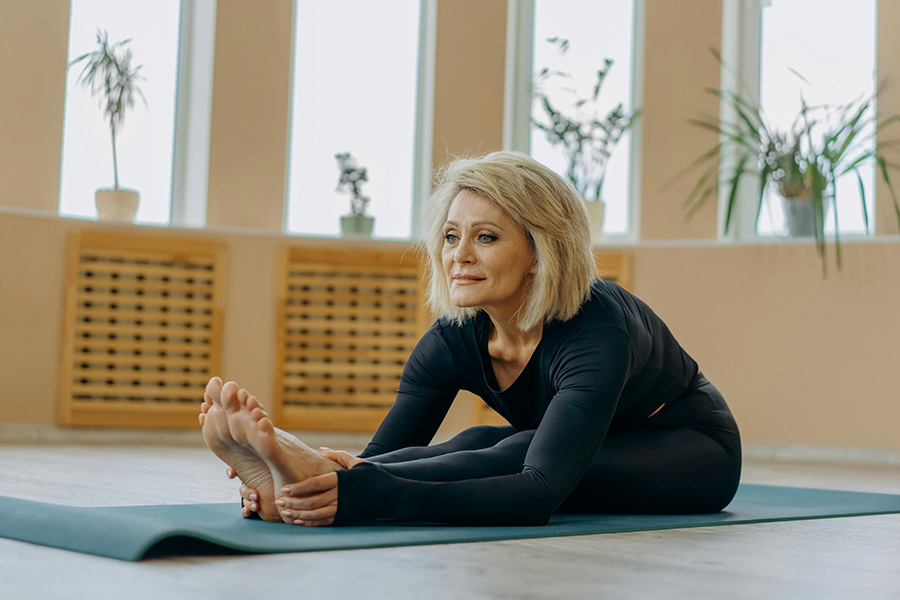
Stretching does not need to be complicated to be effective. Here are a few gentle stretches that target common areas of tightness and can be done from the comfort of your living room or bedroom.
Neck rolls: Slowly lower your chin toward your chest, then gently roll your head to one side, bringing your ear toward your shoulder. Continue rolling your head in a slow circle, then switch directions. This can help relieve tension from sitting or reading for long periods.
Shoulder shrugs and rolls: Raise both shoulders up toward your ears, hold for a few seconds, then release. Follow this with slow shoulder rolls forward and backward. This stretch is especially helpful if you carry tension in your upper back and shoulders.
Seated hamstring stretch: While sitting on the edge of a sturdy chair, extend one leg straight out in front of you with your heel on the floor. Keeping your back straight, gently lean forward until you feel a stretch along the back of your leg. Hold for 15 to 30 seconds, then switch sides. This is a great stretch to do when muscles are already warm, like after a walk or bike ride. You can also use a foam roller to slowly stretch your hamstrings or sides of your thighs.
Wrist and finger stretches: Extend one arm in front of you with your palm facing up. Use your other hand to gently pull your fingers back toward your body until you feel a stretch in your wrist and forearm. Hold for a few seconds, then repeat on the other side. You can also spread your fingers wide and make gentle fists to keep your hands feeling loose.
Ankle circles: While seated, lift one foot slightly off the floor and rotate your ankle in slow circles. Switch directions after a few rotations, then repeat with the other foot. This is a great way to improve ankle mobility.
Self-Massage Techniques for Common Sore Spots
Self-massage is a wonderful way to target specific areas of discomfort without needing to visit a professional. Using your hands or a few simple tools, you can work out tension and give your muscles some relief right at home.
Hands and fingers: Use the thumb of one hand to press and knead the palm of the other in small circular motions. Work your way across the entire palm, then gently squeeze and roll each finger from base to tip. This can feel especially soothing if your hands are stiff from writing, crafting, or other fine motor activities.
Neck and shoulders: Place your fingertips at the base of your skull where your neck meets your head. Apply gentle pressure and make small circular motions, working your way down the sides of your neck to your shoulders. If you find a particularly tight spot, hold gentle pressure there for a few seconds before moving on. Be sure to never cause pain or discomfort; it’s better to work out tension slowly and gently.
Feet: Sit in a comfortable chair and place a tennis ball under one foot. Roll the ball back and forth from your toes to your heel, applying as much or as little pressure as feels good. You can also use your thumbs to press into the arch of your foot and massage in small circles.
Temples and jaw: Place your fingertips on your temples and gently massage in slow circles. Then move your fingers to your jaw, just below the ears, and apply gentle circular pressure. Many people hold tension in their jaw without realizing it, and a quick massage here can bring surprising relief.
Taking a few minutes each day to care for your muscles and joints is a simple act of self-care that can improve your comfort and quality of life. Whether you start with a morning stretch, an evening foot massage, or a quick neck roll between activities, every little bit helps. For more tips on staying active and feeling your best, visit the CapTel blog.