Keep movie night inclusive for everyone with these tips on a hearing loss-friendly movie night.
Movie nights are a classic way to unwind and spend quality time with friends and family. Whether you are revisiting an old favorite or catching the latest blockbuster, the shared experience of getting lost in a story is something everyone can enjoy. For individuals with hearing loss, quiet dialogue, loud background scores, and dark rooms can make it difficult to follow the plot or communicate with others.
Fortunately, a few simple adjustments can transform your living room into an accessible home theater where everyone feels included. You don’t need high-tech equipment to make a difference; often, it just takes a bit of mindfulness and preparation. Here are several practical tips to ensure your next movie night is fun, comfortable, and hearing loss-friendly for all your guests.
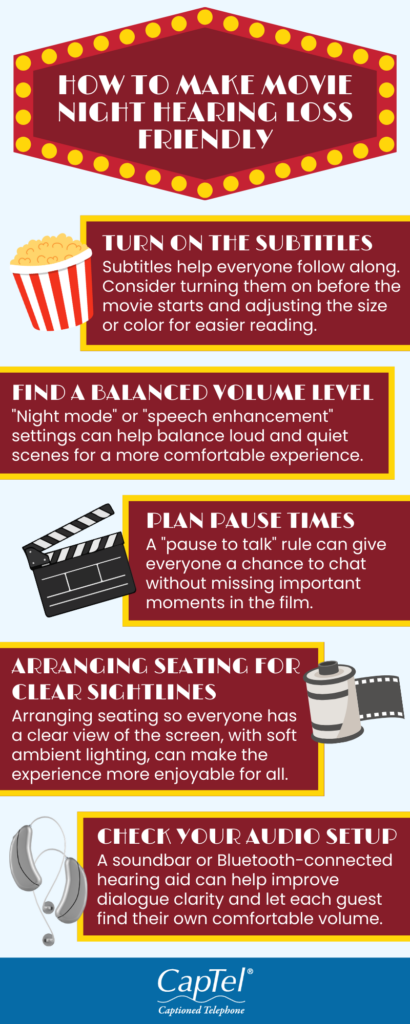
Turn on the Subtitles
Subtitles are the single most effective tool for making a movie accessible. Subtitles are now widely used by many people to catch dialogue that might be mumbled or drowned out by sound effects. Before you press play, make it a standard practice to switch the captions on. Turning subtitles on can help everyone at your movie night follow along with the movie and catch crucial dialogue scenes.
Most streaming services and DVD players allow you to customize the appearance of subtitles. If the standard text is too small or blends into the background, check the settings menu. You can often increase the font size, change the color for better contrast, or add a solid background box behind the text to make it readable against any scene. Making these small tweaks ensures that everyone can follow the story easily.
Find a Balanced Volume Level
One of the biggest challenges in modern movies is the dynamic range of sound. Action scenes can be ear-splittingly loud, while whispered conversations in the next scene are barely audible. This fluctuation can be jarring and difficult to process. Finding a volume level that works for everyone can prevent the constant need to reach for the remote.
To help with this, look into the sound settings on your TV or soundbar. Many modern devices have a “night mode” or “speech enhancement” feature. These settings automatically compress the audio, boosting the volume of dialogue while lowering the intensity of loud explosions or music. This creates a more consistent listening experience, allowing guests to hear what the characters are saying without being blasted by sudden noise. Ask your guests what volume level is comfortable and preferable.
Plan Designated Pause Times
In a casual movie night, commentary is often half the fun. However, listening to a friend’s joke while also listening to the movie can be difficult for someone with hearing loss (and for those without hearing loss, too!).
Try to establish a “pause for talk” rule before the movie starts. If someone needs to clarify a plot point, grab a snack, or share a funny thought, simply hit the pause button first. This creates a clear space for conversation where everyone can focus on each other without competing with the soundtrack. It ensures that no one misses a crucial plot twist because of side chatter and keeps the social aspect of the evening enjoyable.
Arranging Seating for Clear Sightlines
Visual cues are just as important as audio cues. For those with hearing loss, being able to see the screen clearly is key. If a guest relies on lip-reading or captions, a clear view of the bottom of the screen is a must.
Arrange your seating so that everyone has a direct line of sight to the television without obstruction. Avoid placing tall centerpieces on the coffee table that might block the subtitles. Additionally, keep the room lighting “dim but not dark.” Total darkness can make it hard to see your friends if you pause to talk, while too much light can cause glare on the screen. Soft, ambient lighting is usually the best middle ground, allowing for both screen visibility and easy communication during breaks.
Check Your Audio Setup
If you host movie nights frequently, you might consider how your speakers are set up. Most built-in TV speakers project sound backward or downward, which can make dialogue sound muddy. Adding a simple soundbar that projects audio forward into the room can drastically improve clarity.
For a more personalized solution, consider assistive listening devices. Many modern hearing aids can connect directly to smart TVs via Bluetooth, streaming the audio straight to the user’s ears. This allows the wearer to control their own personal volume without affecting the volume in the room for everyone else. It is a fantastic way to ensure comfort for every guest, regardless of their hearing needs. Try asking your guests if this is something they would appreciate and offer to set this up before the movie starts.
With a little preparation, movie night can be a relaxing and inclusive experience for everyone. By prioritizing clear audio and open communication, you ensure that the focus stays on feeling immersed in your movie-night experience. For more lifestyle tips and guides on living well with hearing loss, visit the CapTel blog.