Dive into these fun solo water aerobic workouts for a joint-friendly cardio day.
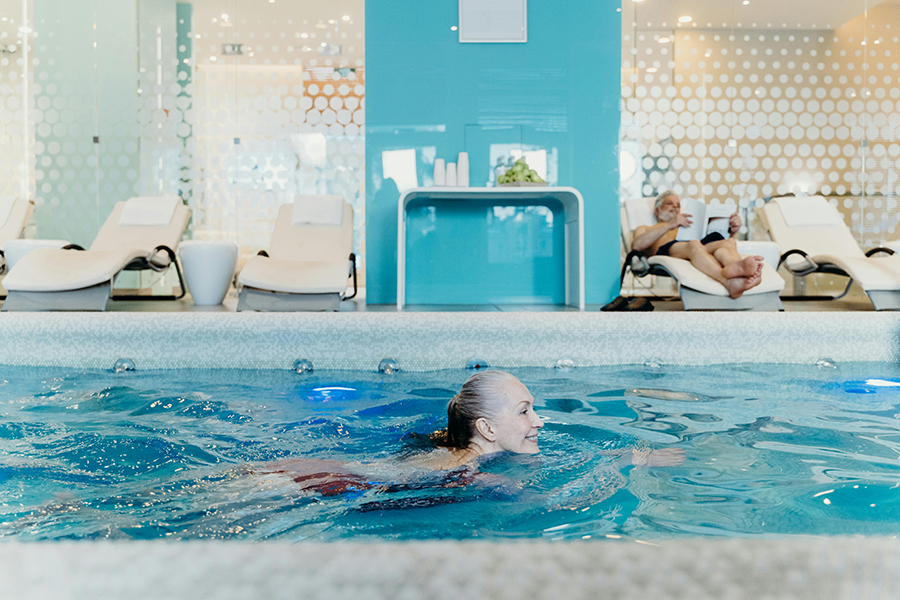
Finding the perfect workout routine that balances cardiovascular health with joint protection can be challenging. High-impact activities, like running or traditional aerobics, can be uncomfortable on knees, hips, and backs. Water aerobics offers a fantastic solution, providing a resistance-based workout that supports your body’s weight, helping to reduce the impact on your joints while still giving you a great cardio workout. Be sure to talk with your doctor before starting a new exercise.
While group classes are popular, they aren’t for everyone. The acoustics in an indoor pool area, like echoing sounds, loud splashing water, or pool drainage and cycling systems, can make it difficult to hear an instructor, especially for those with hearing loss. These water aerobic workouts are great for solo exercise; let’s dive in.
Water Walking and Marching
Walking in water is one of the most effective ways to warm up and increase your heart rate. Because water is significantly denser than air, every step requires more effort than walking on land, engaging your muscles in a new way. The resistance of the water against your legs and arms while you walk turns this simple motion into a full-body workout. For an added challenge, try walking backward or sideways to engage different muscle groups and improve your balance and coordination. Be sure to start walking in thigh or waist-deep water, and slowly graduate to slightly deeper parts of the pool. Walking and marching are also good transition exercises during your routine to keep your heart rate up and muscles warm while you catch your breath from other movements.
Pool Edge Push-Ups
Building upper body strength doesn’t require heavy weights; you can use the pool wall and your own body weight. Standing push-ups in the water are excellent for strengthening the chest, shoulders, and arms without the strain that traditional floor push-ups place on the wrists and lower back. You can do this in the shallow end of the pool. Standing in the water, place your hands on the deck or gutter in a push-up position. Then, keeping your back straight, you can do a pushup. It can help build muscle while keeping your joints free from excess stress and strain. Try moving closer or further from the wall until you find an ideal spot for your comfort level.
Leg Swings and Lifts
The water provides a safe environment to work on hip mobility and lower body strength without the fear of falling. Using the wall for support allows you to isolate specific muscle groups effectively. Try doing leg lifts, swings, and stretches while standing in the pool. These can be easy ways to slowly warm up, or can be done at the end of your workout as a stretching cool down.
The “Bicycle” Pedal
This exercise is a fun way to engage your core and legs while taking all the weight off your feet. You can do this using the side of the pool or a pool noodle for support.
If using the wall, turn your back to the pool edge and rest your elbows on the deck to support your upper body. Allow your legs to float up in front of you. Begin to pedal your legs as if you were riding a bicycle. Push the water away with your heels and pull it back with your toes. The water provides resistance in both directions. If you prefer to be away from the wall, loop a pool noodle around your back and under your arms to keep you afloat, then pedal your legs in the deep end. This variation requires more core stability to keep you upright and creates a great core workout.
You can also reverse this exercise. Try holding on to the edge of the pool and kicking to boost your heart rate and increase your cardio. Frog kicks, butterfly kicks, and flutter kicks can all be done. The wall will hold you in place while you kick, and you’ll get a good leg workout and cardio increase during your sets. Try kicking for 20 seconds and resting 40, then increase to 30 seconds kicking and 30 seconds resting as you feel more confident and stronger over time.
Arm Circles and Sweeps
Just like with the leg swings and lifts, you can do similar movements with your arms and shoulders. These exercises can be especially key if you often feel shoulder pain while lifting or pressing on standard workout equipment. Water’s resistance is a lot lower and can help gently lift your body, leaving you with gentle, slow movements.
Try standing in shoulder-deep water and slowly doing small, tight circles with your arms outstretched. Then, you can gradually make these circles larger and increase the water’s resistance through that motion. This can gently help build shoulder muscles while not putting pressure on joints. You can also gently twist your core and arms around in wide, sweeping motions to build core and arm muscle, which can help with balance and posture.
Safety First
Even though water workouts are low-impact, safety is still paramount. Always ensure you are well-hydrated; it can be easy to forget that you sweat in the pool because you are already wet. Bring a water bottle to the poolside and sip frequently.
Be sure to talk with a doctor before beginning a new exercise routine, and always listen to your body. Take time to warm up properly, and only perform movements if they feel comfortable. You may want to invest in a personal trainer for a lesson or two; they can help you build a deck of exercise options that work for your fitness level and movement preferences that are safe and comfortable for you to do.
Solo water aerobics offer a joint-friendly way to stay active and healthy. Try a variety of movements and exercises in the water to find what works best for you. For more tips on staying active and healthy living, visit the CapTel blog.